Why visit the Accademia Gallery with an expert guide?
The Story Behind the Masterpiece: Michelangelo’s David
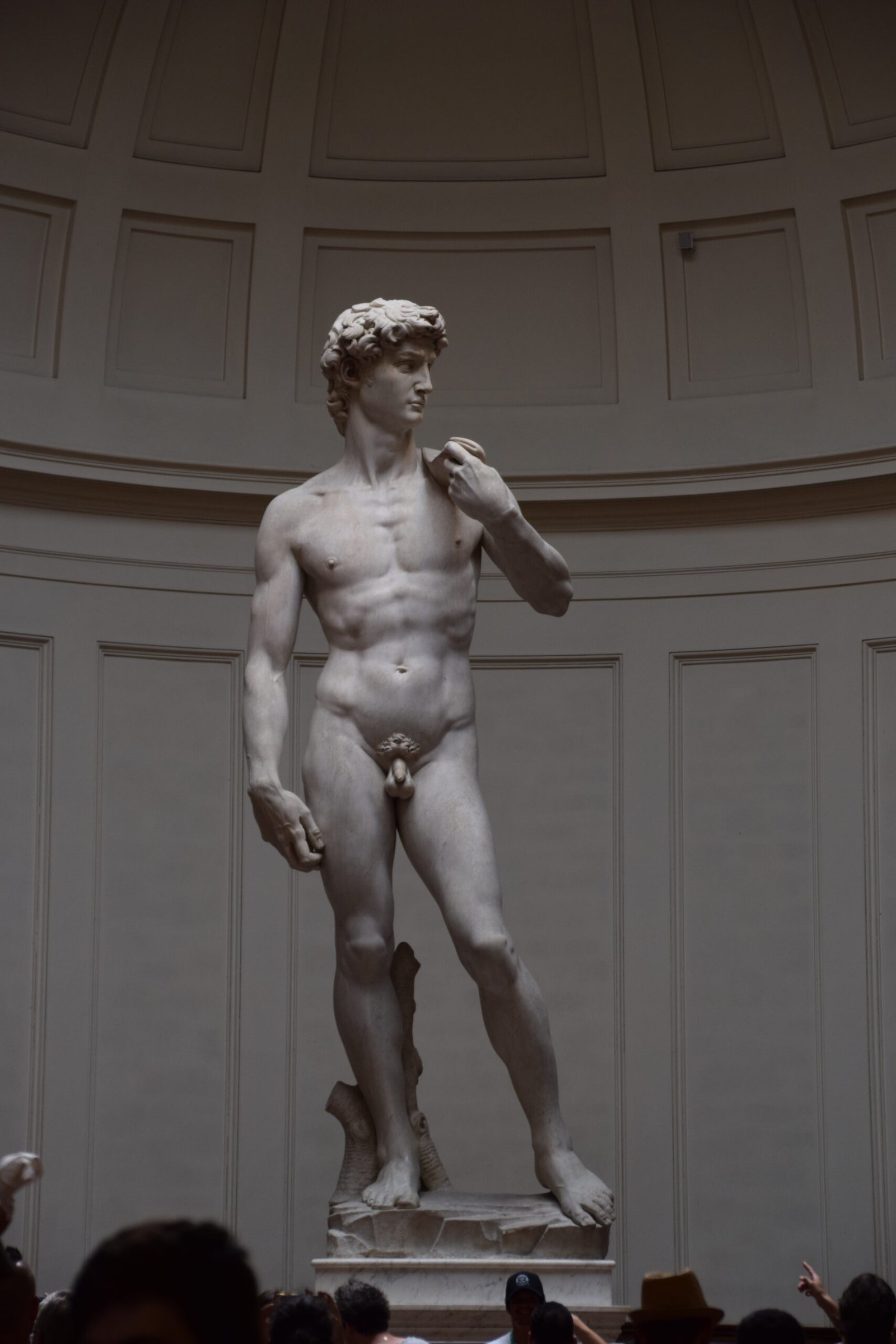
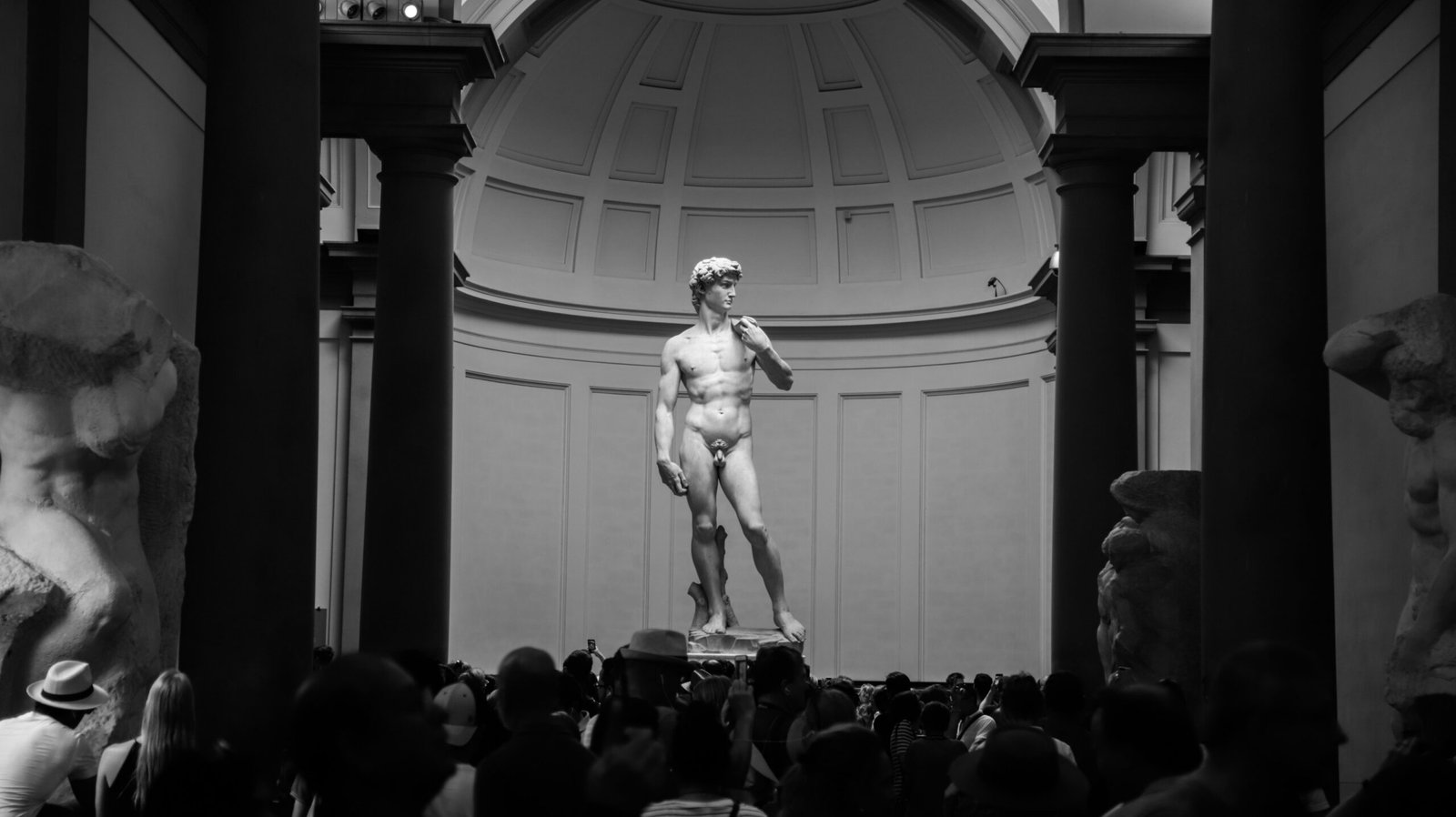
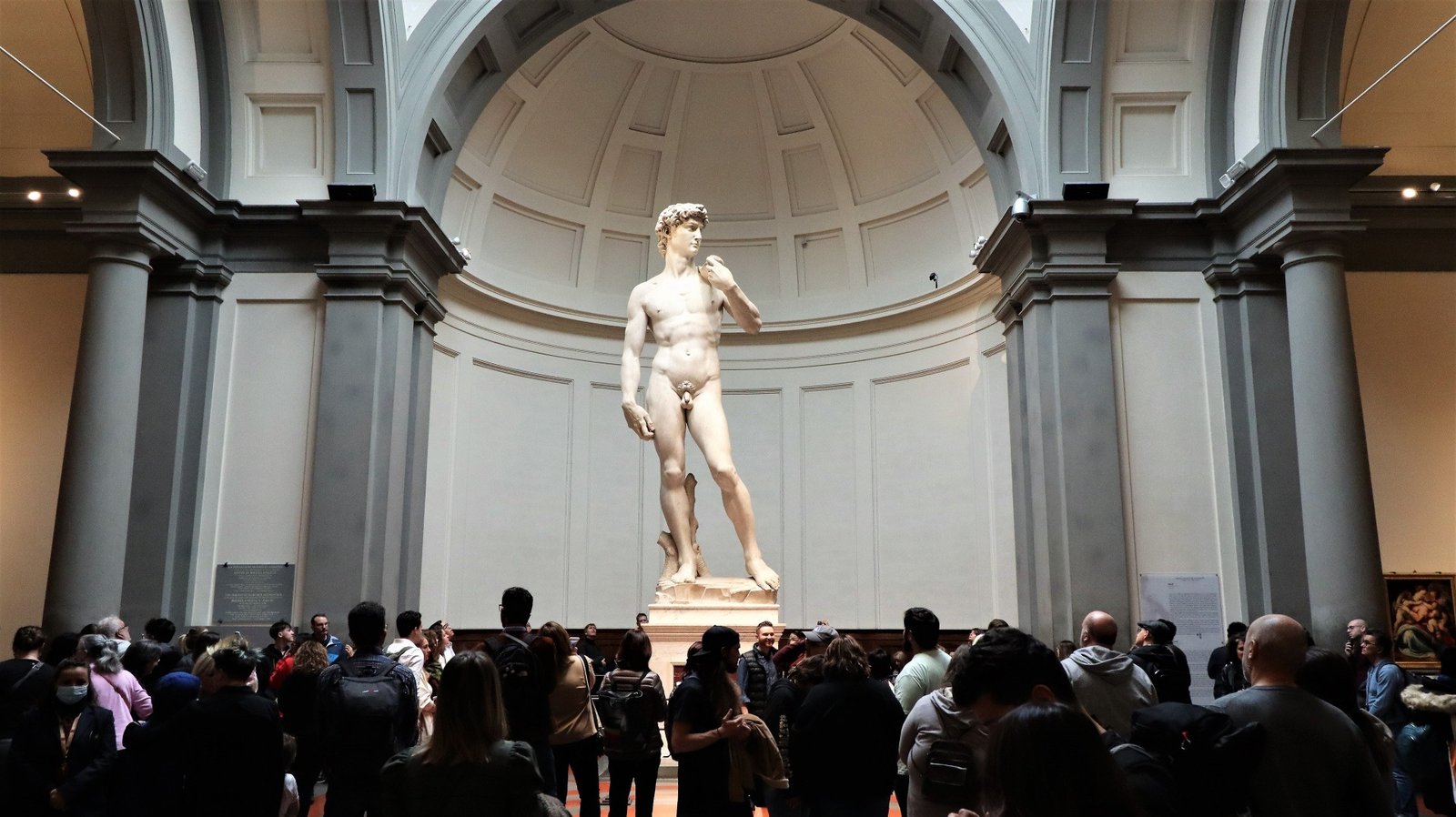
Standing at over 17 feet tall, Michelangelo’s David is more than just a masterpiece of sculpture; it is a symbol of the Florentine Republic’s strength and independence. Carved from a single, massive block of Carrara marble that had been deemed “defective” and abandoned by other artists for over 40 years, Michelangelo took on the challenge at just 26 years old.
Unlike other artists of his time who depicted David after his victory over Goliath, Michelangelo chose to represent the hero in the moment of highest tension: just before the fight. If you look closely at his furrowed brow, the intense gaze, and the bulging veins in his right hand, you can feel the adrenaline and concentration. During our 1-hour guided tour, we will explore these anatomical details that make the statue seem alive, and we’ll discuss how Michelangelo managed to correct the proportions to account for the statue’s original intended placement high above the ground on the Florence Cathedral.
The Hall of Prisoners and the “Non-Finito” Technique
As we walk toward the David, we pass through the Hall of the Prisoners (I Prigioni). These four unfinished sculptures were originally intended for the tomb of Pope Julius II. They are some of the most moving works in the gallery because they perfectly illustrate Michelangelo’s “non-finito” (unfinished) technique.
You will see figures struggling to emerge from the heavy stone, with tool marks still visible on the marble surfaces. Michelangelo famously believed that the figure was already living inside the stone and his job was simply to “set it free.” Seeing these prisoners in their raw state provides a unique, behind-the-scenes look at the artist’s creative process. Our guide will point out the subtle details of the Awakening Slave and the Bearded Slave, explaining why these works remain some of the most powerful examples of human emotion in art history.
Hidden Gems: The Gipsoteca and Musical Instruments
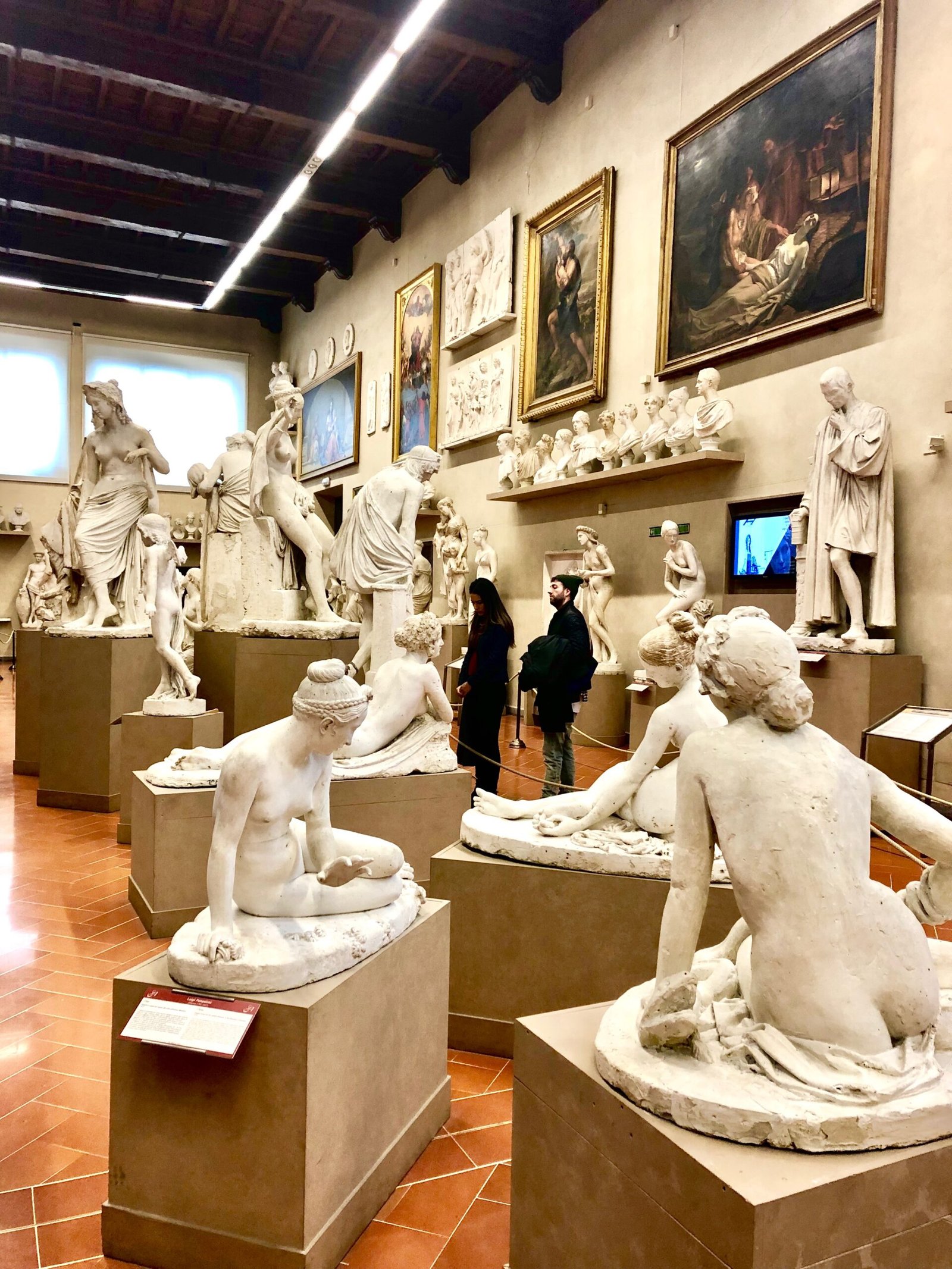
While the David is the main attraction, the Accademia Gallery holds other treasures that many visitors overlook. Our tour provides context on the Bartolini Gallery, also known as the Gipsoteca. This long hall is filled with 19th-century plaster casts by Lorenzo Bartolini, offering a glimpse into a different era of Florentine artistic taste.
Additionally, the gallery houses the Museum of Musical Instruments, featuring rare pieces from the private collections of the Grand Dukes of Tuscany, the Medici, and the Lorraine families. Here, you can admire a tenor viola and a cello made by the legendary Antonio Stradivari. Including these stops in our narrative ensures you get a complete understanding of the Accademia’s diverse artistic heritage in just 60 minutes.